Digging Pathways for Utility Installations
Trenching in North Bend for sewer lines, water lines, and septic connections with minimal landscape disruption
GoodBoy Excavation & Plumbing provides trenching for residential and commercial utility installations in North Bend, Washington. You need trenching when sewer lines, water lines, septic systems, or electrical conduits must run underground from a structure to a municipal tie-in or private system. The work involves digging narrow, controlled channels at specific depths and slopes so that pipes drain correctly and conduits remain protected below the frost line.
Trenching is performed with excavation equipment that cuts clean lines through soil, rock, and compacted fill. The crew measures depth and grade as digging progresses to ensure that pipe fall meets code requirements and that backfill can be compacted without shifting the line. Coordination with plumbing and septic installers keeps the project moving efficiently, and backfill techniques are designed to restore grade and minimize damage to lawns, driveways, and landscaping.
If you are adding utilities or connecting to municipal systems in North Bend, contact the team for a free estimate before excavation begins.
What Trenching Involves and How It Protects Your Property
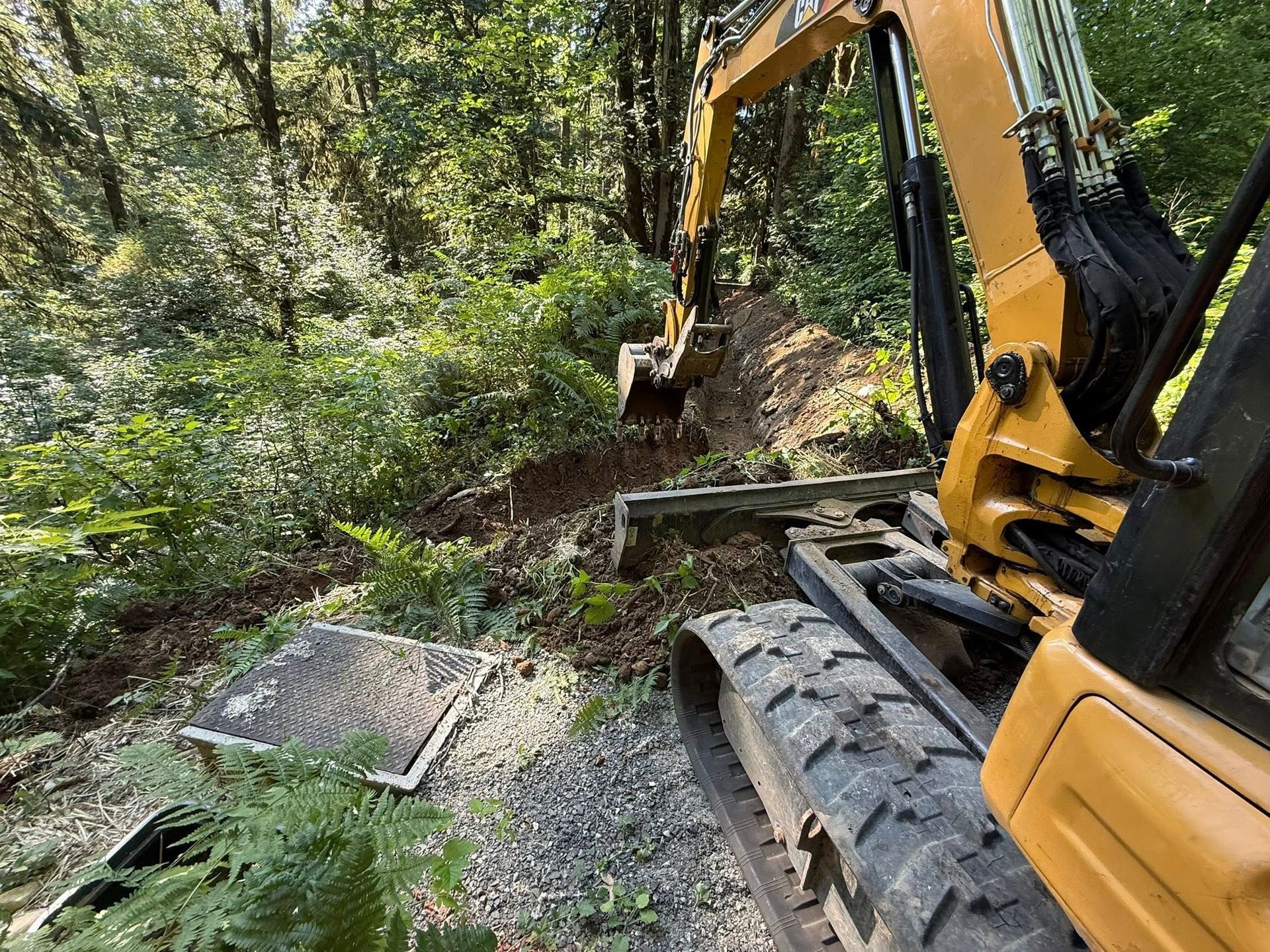
Trenching starts with marking utility locations and confirming that no existing lines will be damaged during excavation. You will see a narrow trench dug along the planned route, with depth adjusted based on pipe size, frost depth, and local code requirements. The trench bottom is leveled or sloped to match the drainage plan, and bedding material such as sand or gravel is sometimes added to support the pipe.
Once the pipe or conduit is placed, backfill is added in layers and compacted to prevent voids that could cause settling or surface sinking. GoodBoy Excavation & Plumbing uses efficient excavation and backfill methods to reduce disruption to existing landscaping and hardscaping. You will notice that trenches are straight, pipe is installed at the correct depth, and the surface is restored to near-original grade.
This service supports municipal tie-ins, private septic systems, and utility corridor installations. It does not include plumbing connections, electrical wiring, or permit filing. The crew operates under licensed and insured credentials, which ensures that trenching meets local regulations and reduces liability during utility installation projects.
Understanding Trenching for Utility Work
Trenching is a precise service that requires attention to depth, grade, and existing infrastructure, so knowing what to expect helps you coordinate with other trades and keep your project on schedule.
What utilities can be installed using trenching? Trenching supports sewer lines, water lines, septic connections, electrical conduit, and fiber optic or communication lines. Each type has specific depth and slope requirements.
How does the crew avoid damaging existing utilities? Before digging begins, utility locations are marked by calling the local utility notification service. The crew digs carefully around known lines and uses hand tools near marked areas.
When is trenching performed during a construction project? Trenching typically happens after site prep and excavation are complete but before foundation work or final grading. It must be done before utilities are needed for building occupancy.
Why does trench depth matter? Depth ensures that pipes remain below the frost line, meet code requirements, and are protected from surface traffic. Sewer lines also require specific slopes to drain properly without pumps.
What happens to the soil that is removed? Excavated soil is either stockpiled on-site for backfill or hauled away if it contains rock, clay, or contamination. Backfill is compacted in layers to prevent settling.
GoodBoy Excavation & Plumbing coordinates trenching with plumbing, septic, and electrical contractors to ensure that installations happen in the correct sequence. Contact the team to schedule an assessment and receive a cost estimate based on your project requirements.